


AI is transforming how businesses track supplier carbon footprints, making the process faster, more accurate, and actionable. Here's what you need to know:
- Why It Matters: Businesses need to track emissions to meet regulations, satisfy investors, and reduce environmental impact. Manual methods are slow, error-prone, and lack detailed insights.
- How AI Helps: AI automates data collection, improves accuracy, and provides real-time insights. It uses tools like IoT sensors, machine learning, and satellite imagery to process emissions data.
- Key Features:
- Tracks emissions from energy use, transportation, and production.
- Fills data gaps with statistical models and historical patterns.
- Visualizes emissions data with dashboards and forecasts future trends.
- Identifies areas for improvement, like inefficient processes or outdated equipment.
- Actionable Insights: AI highlights the biggest emission sources and suggests practical ways to cut emissions, such as optimizing transportation routes or switching to renewable energy.
Want to get started? Tools like Find My Factory offer AI-powered platforms to simplify supplier management and emissions tracking, helping businesses achieve their sustainability goals faster and more effectively.
Data Collection with AI
Required Data Points
To calculate supplier carbon footprints, AI systems rely on specific types of data, including:
- Direct Emissions: Details like energy used in manufacturing, on-site fuel consumption, and emissions from industrial processes.
- Transportation: Information on fuel usage for shipping and logistics.
- Facility Data: Energy consumption for buildings, including HVAC systems and lighting.
- Production Metrics: Data on production volumes, raw materials used, and waste generated.
- Supply Chain: Insights into emissions from upstream suppliers and material sourcing.
These platforms can process various input formats, such as utility bills or data from IoT sensors.
AI Data Collection Methods
AI uses several techniques to gather carbon footprint data effectively:
- Smart Sensors and IoT: Track energy use, emissions, and resource consumption in real time.
- Document Processing: Extract data automatically from invoices, utility bills, and shipping documents.
- API Integrations: Connect directly to supplier systems and sustainability tools.
- Satellite Imagery: Analyze operations at facilities and transportation routes.
- Machine Learning Models: Spot patterns to identify errors or missing data.
For instance, Find My Factory’s platform links directly to supplier systems and IoT devices, ensuring a steady flow of accurate data.
Data Accuracy Checks
AI systems use various methods to validate the accuracy of collected data:
Validation MethodPurposeAction TakenAnomaly DetectionFlags unusual patterns or outliersMarks data for human reviewCross-Reference CheckingCompares data to industry benchmarksHighlights deviations for further analysisTime Series AnalysisTracks trends and seasonal changesIdentifies inconsistencies in reportingData Completeness ScoringChecks for missing informationRequests additional data if needed
Carbon Footprint Calculations
AI Models for Emissions Analysis
AI systems use machine learning to analyze supplier data and calculate carbon emissions. These models combine multiple data sources with standardized emission factors provided by organizations like the EPA and GHG Protocol.
The process involves three main steps:
- Normalize raw data into uniform units for easy comparison.
- Convert the normalized data into CO₂e emissions using methods specific to each emission scope.
- Use machine learning to refine estimates by benchmarking, spotting anomalies, and incorporating verified feedback.
The accuracy of calculations can vary depending on the emission category - whether direct (Scope 1), energy-related (Scope 2), or indirect (Scope 3). These differences arise from the variety of data sources and modeling techniques used. Next, let’s look at how AI handles missing supplier data.
Filling Data Gaps
AI systems manage incomplete supplier data with several techniques to ensure precise calculations:
- Statistical Inference: AI estimates missing values by analyzing patterns from similar suppliers.
- Temporal Pattern Recognition: By studying historical trends, such as seasonal or cyclical patterns, AI can predict values for periods with irregular reporting.
- Confidence Assessment: Each calculation is assigned a confidence level based on how complete the data is. When data availability is high, the system uses the provided figures directly. If data is limited, it flags calculations for manual review.
To address missing information, the system sends automated data requests through supplier portals, focusing on the most critical gaps to improve accuracy.
Transform Your Tracking with AI-Driven Carbon Accounting Software
sbb-itb-96abbe8
Data Visualization and Reports
Once emissions are calculated, visual tools make it easier to take action by highlighting key insights.
Identifying Key Emission Sources
AI breaks down emission data to reveal where reductions will have the most impact. This includes:
- Category hotspots: Identifying suppliers with the highest emissions.
- Process inefficiencies: Highlighting manufacturing steps that produce excessive emissions.
- Geographical factors: Examining how emissions vary across regions.
- Seasonal patterns: Tracking how carbon output changes throughout the year.
Carbon Data Dashboards
Interactive dashboards provide real-time data, helping teams stay on top of:
- Carbon intensity for each supplier.
- Progress toward reduction goals.
- Emission trends over time.
- Comparative performance of different suppliers.
These dashboards can be tailored to meet the needs of different roles, whether it's executives looking at big-picture trends or technical teams diving into specific details.
Forecasting Future Emissions
Predictive models help estimate future emissions, allowing teams to act before problems arise. These forecasts are based on:
- Historical emission patterns.
- Seasonal shifts in output.
- Expected business growth.
- Adjustments in supplier networks.
With this data, teams can set practical goals, plan supplier changes, allocate resources wisely, and refine their strategies.
Using AI Insights
AI leverages detailed data analysis and visualization to turn complex information into practical strategies for cutting carbon emissions.
Key Areas for Emission Reduction
AI dives into emissions data to identify where meaningful cuts can be made:
- Process inefficiency: Identifies energy-heavy steps in manufacturing that need optimization.
- Transportation optimization: Recommends routes and methods to lower emissions.
- Equipment upgrades: Flags outdated machinery for replacement with more efficient models.
- Energy source transitions: Suggests moving to renewable energy options.
By ranking these opportunities based on their carbon reduction potential and ease of implementation, AI helps procurement teams prioritize changes that deliver the most impact. These insights also support smarter collaboration with suppliers.
Partnering with Suppliers
AI can enhance supplier relationships by promoting transparency and setting clear goals.
Share Data Transparently
- Provide real-time access to AI-generated insights.
- Review recommendations together to align on strategies.
- Monitor progress toward shared emission goals.
- Pinpoint areas that need more attention.
Set Clear Targets
- Define specific emission reduction goals informed by AI data.
- Establish timelines for achieving these goals.
- Determine necessary resources for implementation.
- Agree on success metrics to measure progress.
Tracking and Improving Results
AI ensures that emission reduction efforts stay on track and deliver measurable results. Its capabilities include:
- Monitoring emissions: Tracks actual emissions against forecasts and highlights any deviations.
- Validating impact: Confirms reductions by comparing data before and after implementation. It accounts for seasonal or production changes, isolates the effects of specific actions, and calculates the return on investment for carbon-cutting measures.
If goals aren’t met, AI identifies the root causes and suggests adjustments. This creates a feedback loop that continuously improves supplier carbon footprints over time.
Find My Factory: AI-Powered Supplier Management
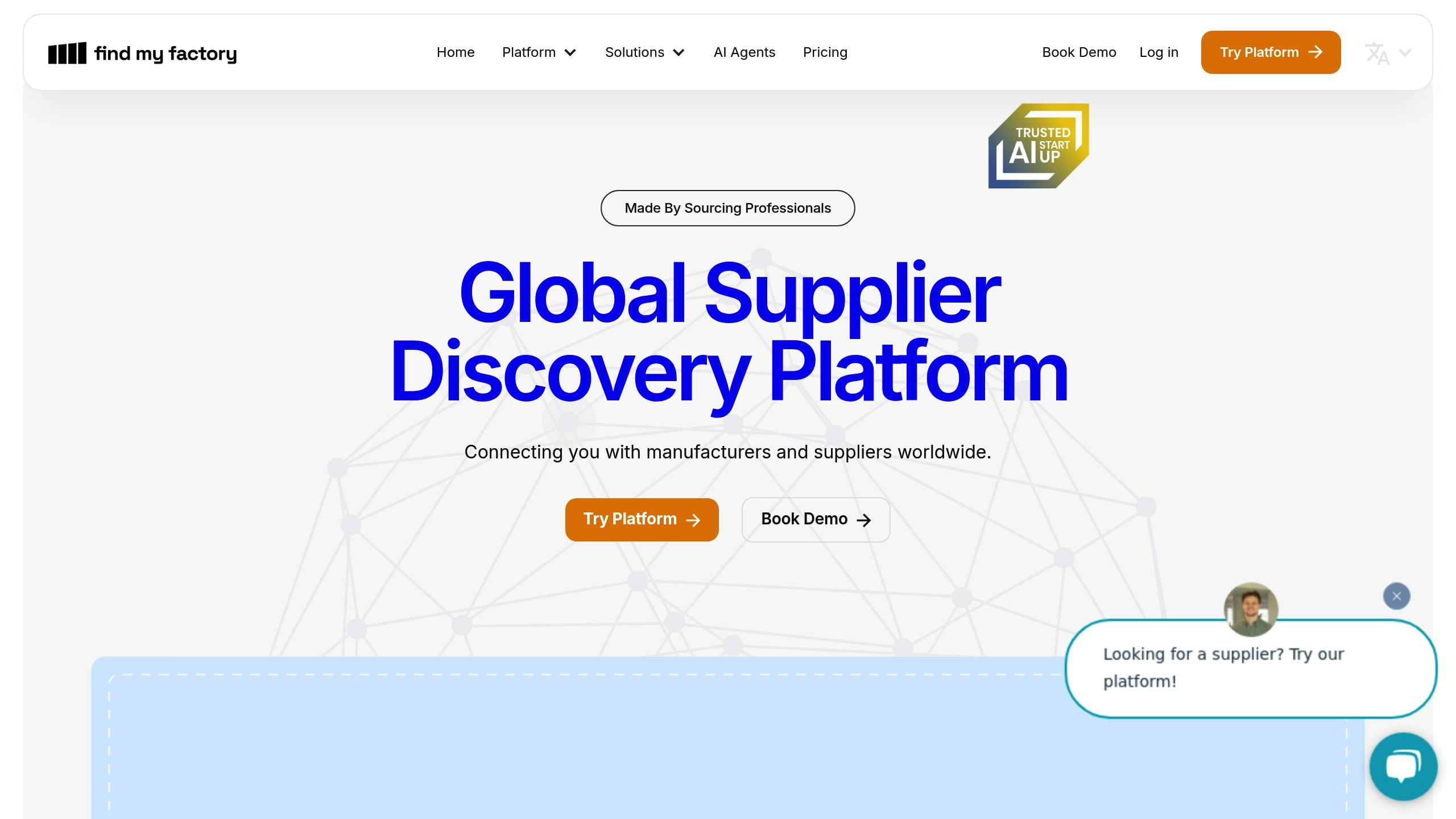
Find My Factory uses AI to help procurement teams monitor supplier emissions with a database of millions of suppliers. This platform enables teams to make informed decisions about emissions tracking and sustainability.
Carbon Tracking Features
The platform simplifies emission tracking with several AI-driven tools:
- Advanced Search Options: Five search methods to find suppliers based on sustainability criteria.
- Custom Data Tracking: Adjustable settings to monitor emissions across different supplier categories.
- Workflow Integration: Built-in tools for team collaboration and process automation.
All these tools are accessible through a single dashboard, offering real-time updates on supplier emissions.
Tools for Procurement Teams
Find My Factory provides additional features to help procurement teams manage and share emissions data effectively:
FeatureFunctionBenefitSourcing ProjectsTrack supplier emissions dataCentralized view of environmental dataList CreationGroup suppliers by emission levelsQuickly identify high-impact areasStakeholder ReportsCreate PDF exports of emissions dataShare clear, actionable insights
Flexible Plans for Any Business
Find My Factory offers pricing options designed to meet the needs of businesses of all sizes:
Starter Plan ($707/month)
- Access for one user.
- Basic tools for emission tracking.
- Perfect for small businesses getting started.
Team Plan ($3,259/month)
- Collaboration for up to five users.
- Advanced tracking features.
- Great for mid-sized companies.
Enterprise Solution
- Custom setup tailored to your needs.
- Administrative controls and advanced tools.
- Designed for comprehensive emission management.
Conclusion
Main Points
AI-powered tracking simplifies data collection and provides real-time analysis to identify opportunities for reducing emissions. Tools like Find My Factory highlight how efficiently suppliers can be located, paving the way for immediate action.
Getting Started
Ready to bring AI tracking into your sustainability efforts? Here’s how to begin:
- Assess Your Needs: Determine what works best for your organization's size and goals.
- Choose the Right Tools: Look for platforms with features like automated data collection, real-time monitoring, system integration, and flexible reporting options.
- Implement Gradually: Start by focusing on your primary suppliers, then expand tracking across your network step by step.
Modern platforms are designed to be user-friendly and offer straightforward onboarding, helping you see results faster.